Often I find my movement defined by the schedule of the public infrastructure that I use. The schedule forces on me a rhythm of movement that stands at a distance from my instinctive way of moving. This scheduled movement discretizes my perception of time and puts me in sync with other passengers sharing the same infrastructure.
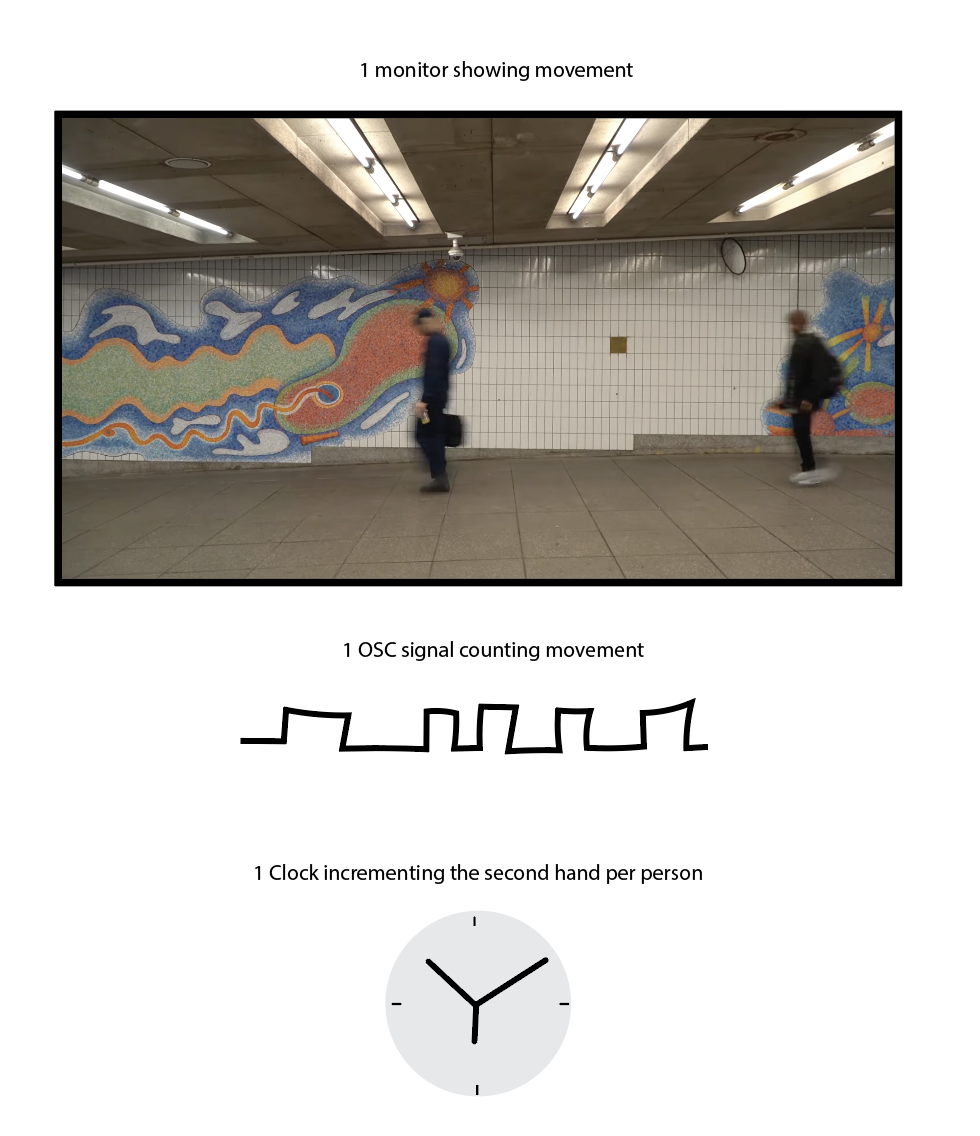
This becomes particularly apparent when moving through a tunnel between two trains. The flow of people through the tunnel is very rhythmic, almost discrete. A train arrives and a large crowd moves through the tunnel together. Then the flow slows down, until another train arrives and another wave of people follows.
We accept the irregular movement of thousands of people as normal, but we would consider a clock behaving in exactly the same way to be broken.
This project uses the number of people passing through a tunnel between two trains as the smallest unit of time. Each person advances time by the same amount. As trains arrive and large crowds move through the tunnel, time accelerates. Between trains, time slows down.
We will build a clock whose speed is defined by the movement of passengers in the NYC subway system. The second pointer will be pulsed by the number of people passing through the tunnel connecting two trains. Because the flow of people is strongly rhythmic, the second hand will move at strongly varying speeds.
To strengthen this impression, a traditional clock design with three hands, seconds, minutes and hours, will be used. A used watch with a quartz clock will be modified so that its regular pulse is replaced by the movement of passengers.
Just like my own movement is put in sync with the conceptually shaped movement between two trains, the clock is put in sync with that same movement. Its concept of time is no longer regular or independent, but shaped by public infrastructure. We will have a clock that is in sync with the actual rhythm of the city. Both the time and the movement of people are conceptually shaped and in sync.
We normally think of natural cycles such as the movement of the sun or the tides as rhythms that structure our shared experience of time. Here, a constructed system produces another shared rhythm. As we start building a concept of time based on passenger movement through public infrastructure, the project can expand into generating sun movement, tidal cycles or other environmental rhythms in the same way.
I appreciate the warm sun, the wind, the sound of the turbines, the melancholic atmosphere and the knowledge that it is all synthetic. I see this experience as a parallel to my subway moment shown above, where the tunnel serves like a natural phenomenon as people move through it.
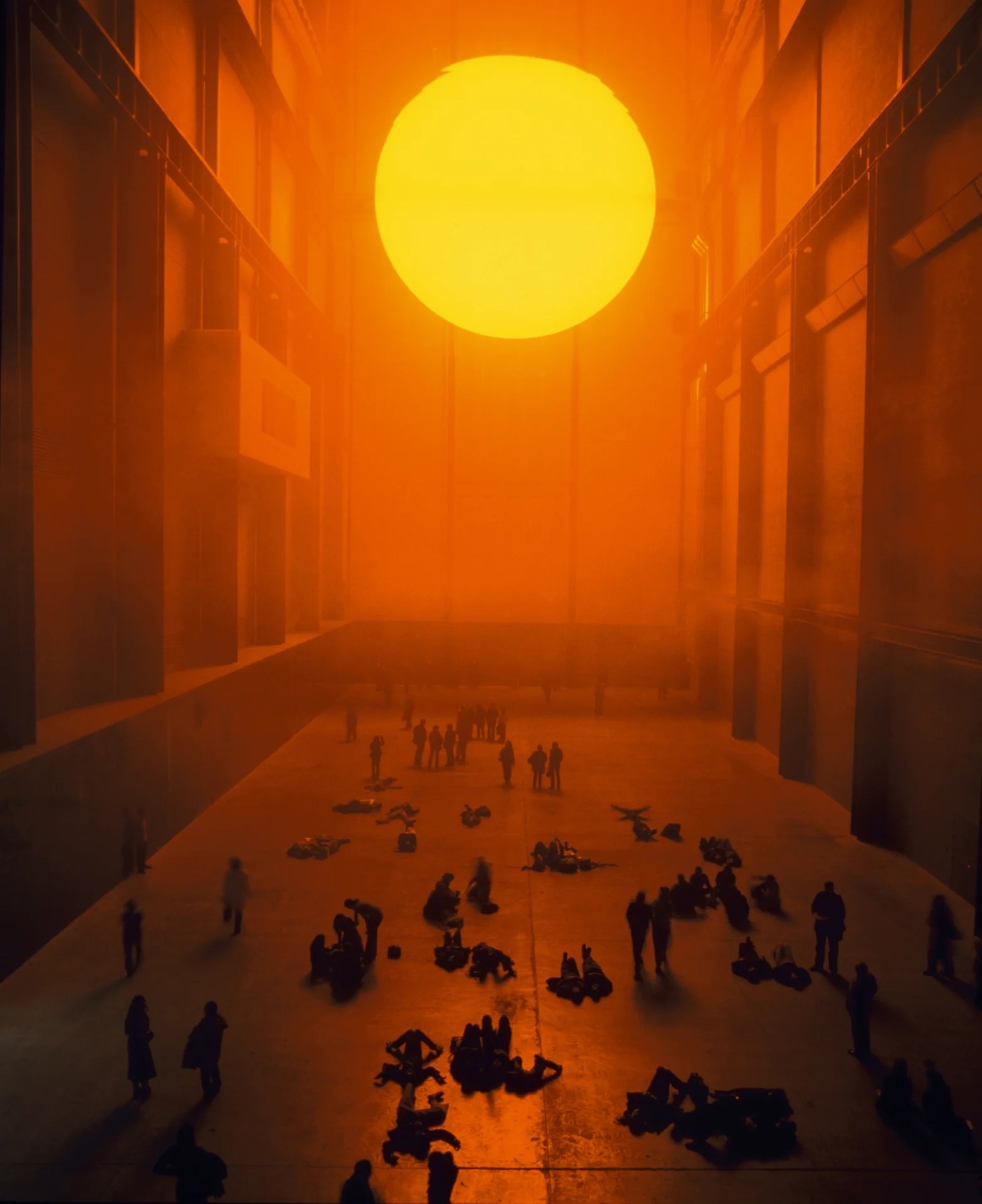
The Weather Project — Olafur Eliasson
I find it fascinating how systems of naturally different frequency can be kept perfectly in sync, similar to two train schedules meeting at the same station.
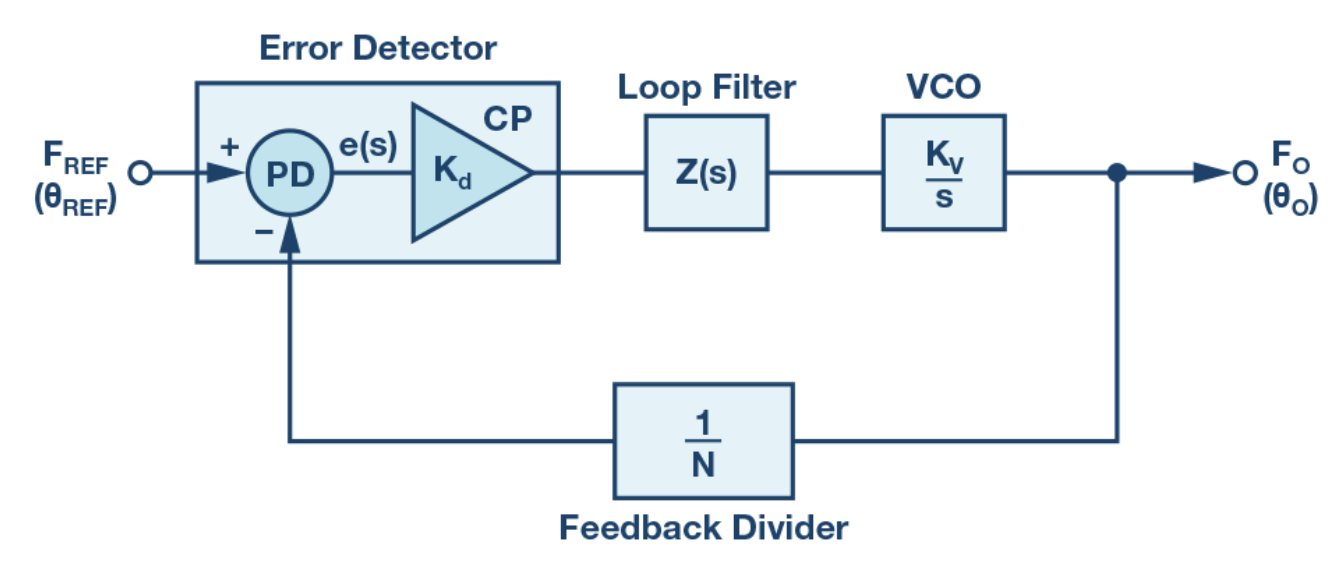
Phase-Locked Loop (PLL) Fundamentals — Analog Devices
I appreciate how continuous rotation can be discretized by an escapement mechanism. I see similarity to the periodic peak of passengers moving through a subway tunnel.