From the previous post:
Often I find my movement defined by the schedule of the public infrastructure that I use. The schedule forces on me a rhythm of movement that stands at a distance from my instinctive way of moving. This scheduled movement discretizes my perception of time and puts me in sync with other passengers sharing the same infrastructure.
This becomes particularly apparent when moving through a tunnel between two trains. The flow of people through the tunnel is very rhythmic, almost discrete. A train arrives and a large crowd moves through the tunnel together. Then the flow slows down, until another train arrives and another wave of people follows.
We accept the irregular movement of thousands of people as normal, but we would consider a clock behaving in exactly the same way to be broken.
This project uses the number of people passing through a tunnel between two trains as the smallest unit of time. Each person advances time by the same amount. As trains arrive and large crowds move through the tunnel, time accelerates. Between trains, time slows down.
I implemented this experience with an animation that increments the second pointer of a clock with every person passing through a subway tunnel.
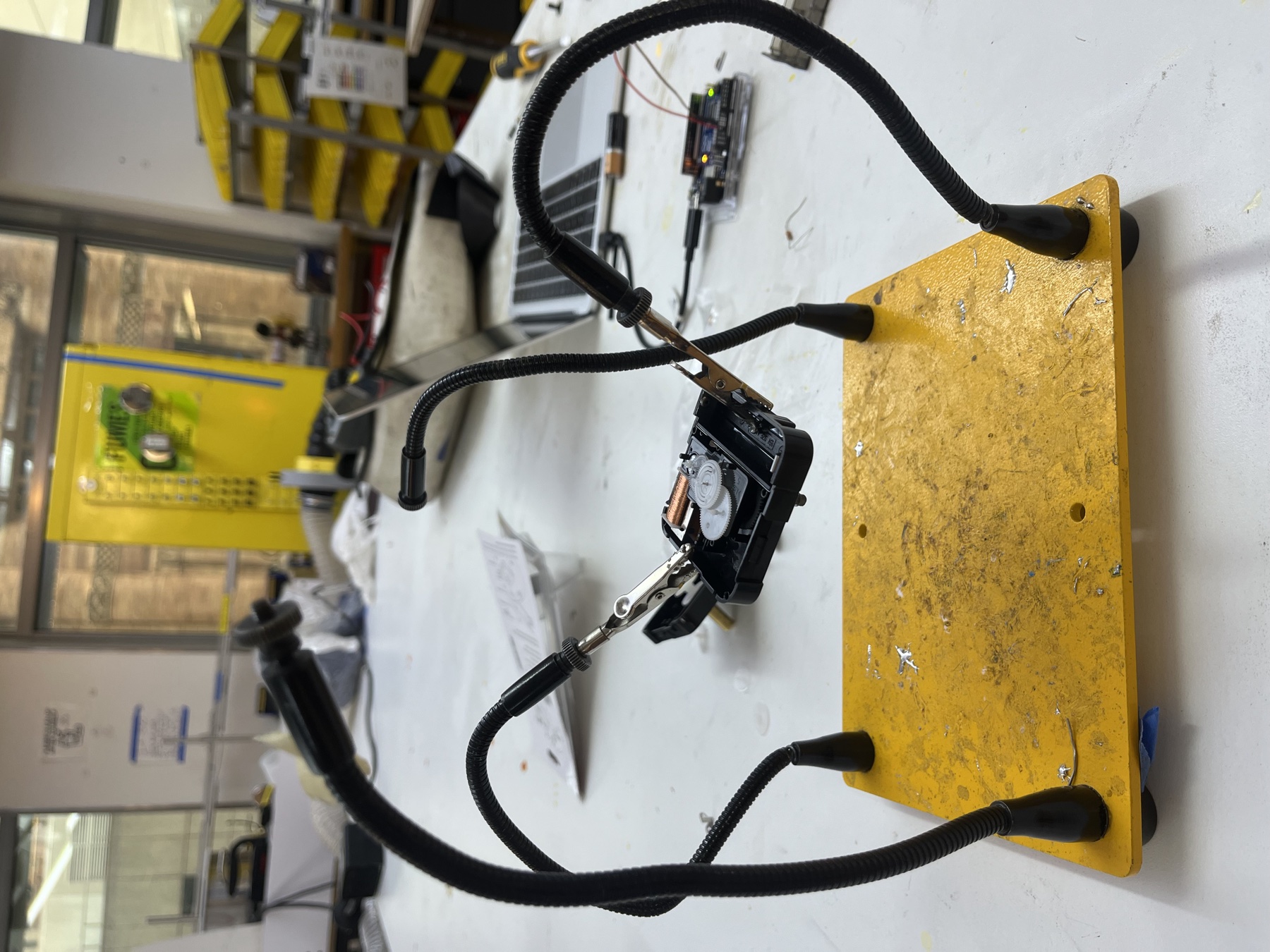
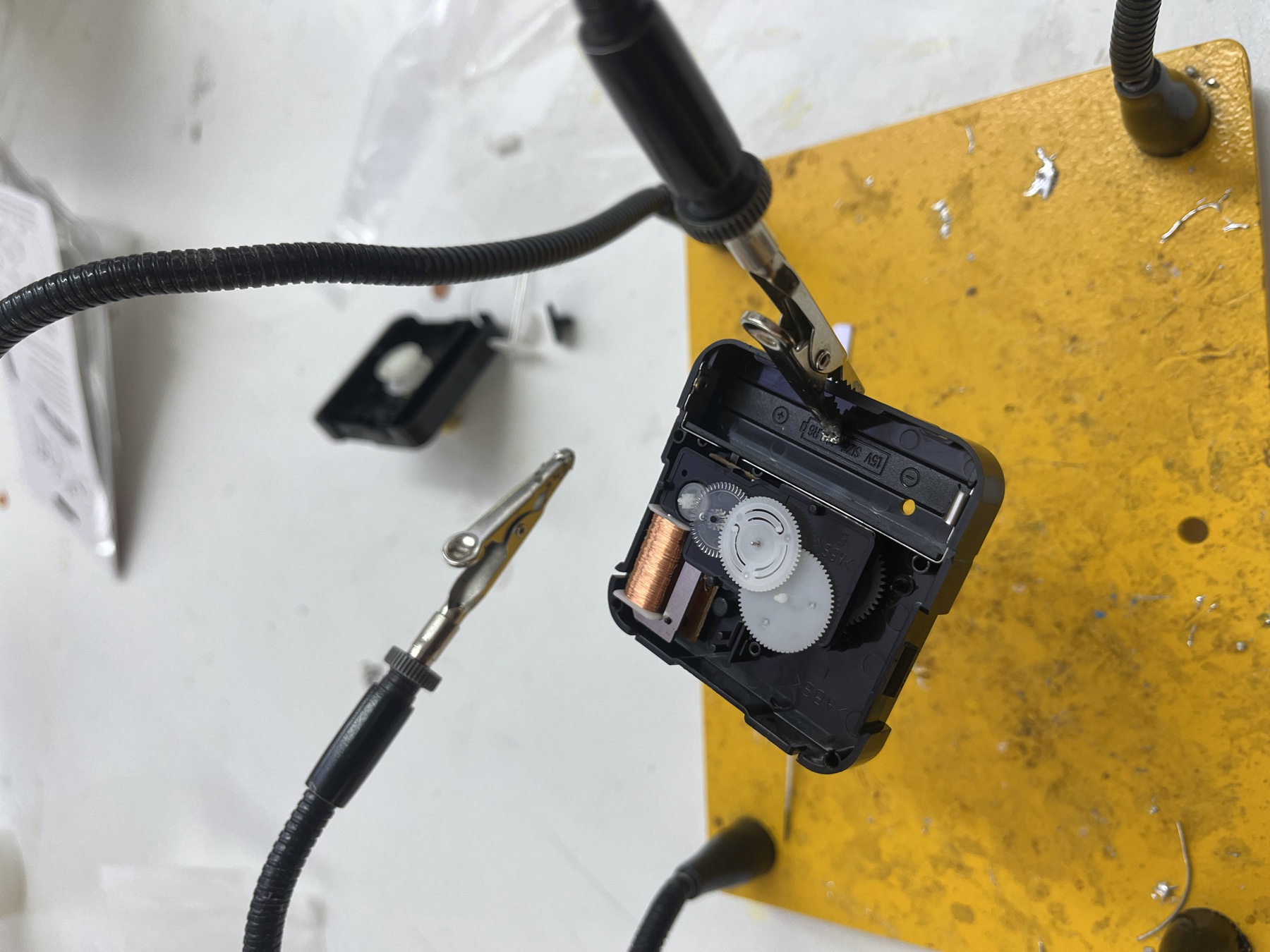
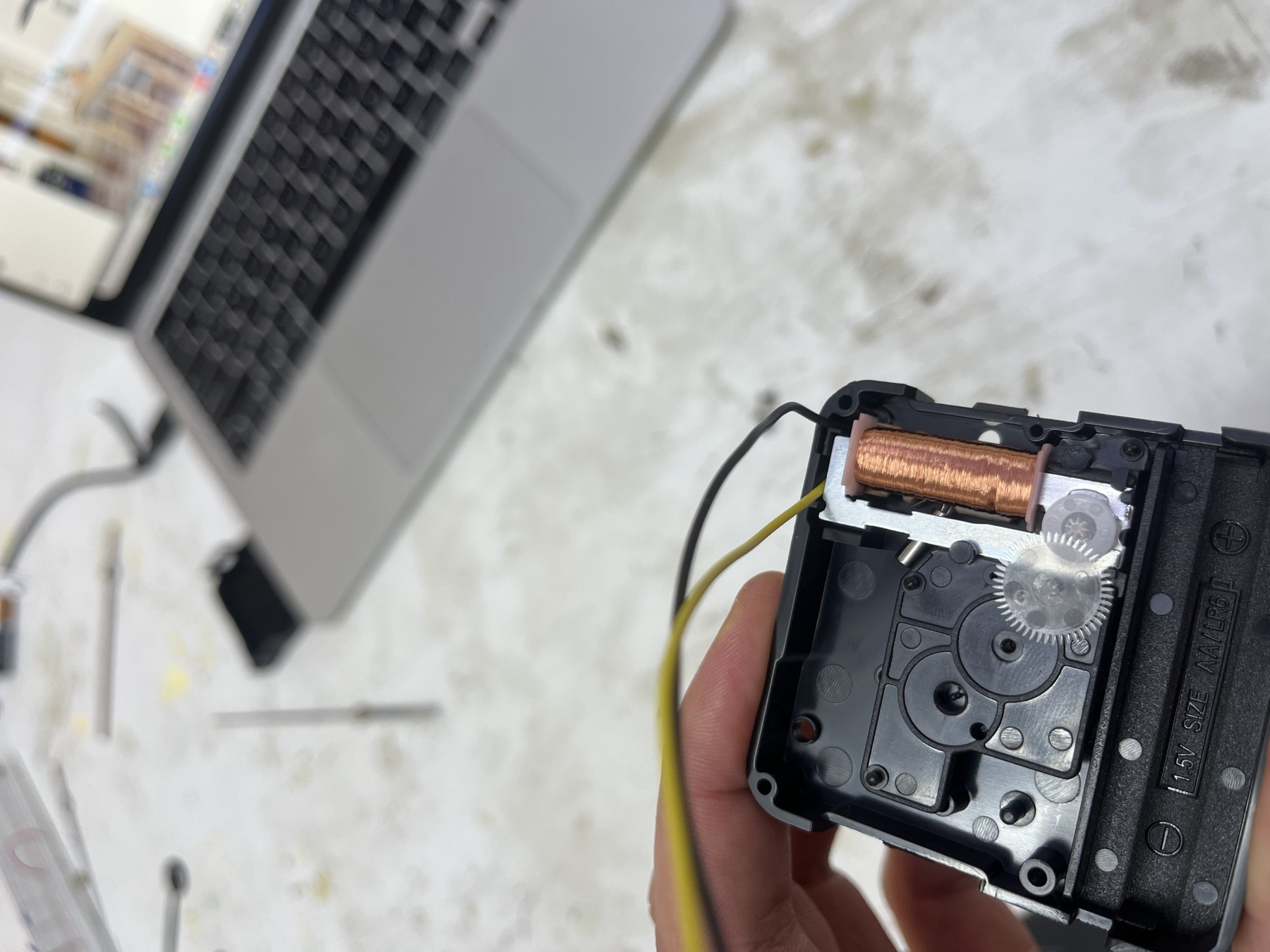
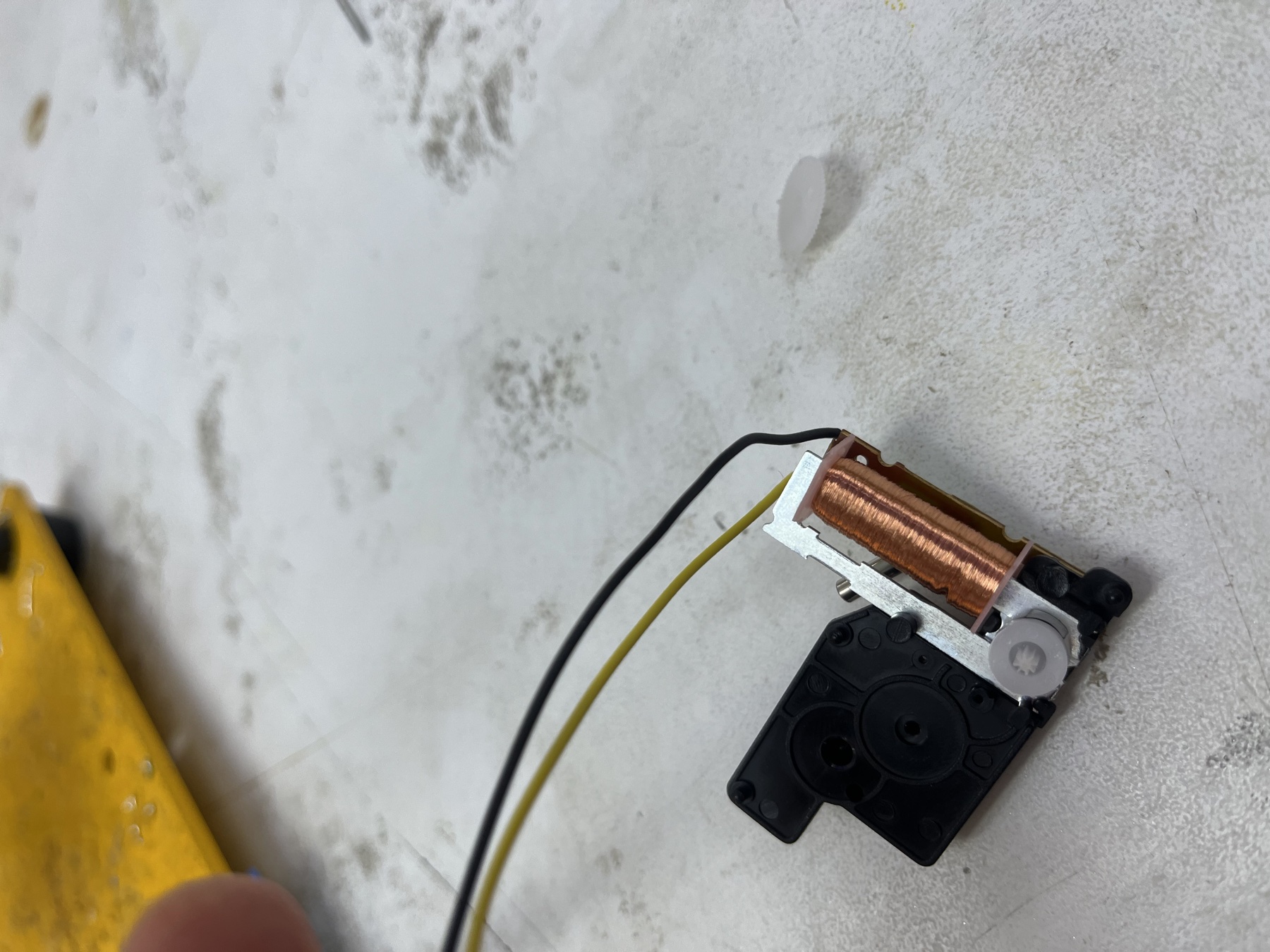
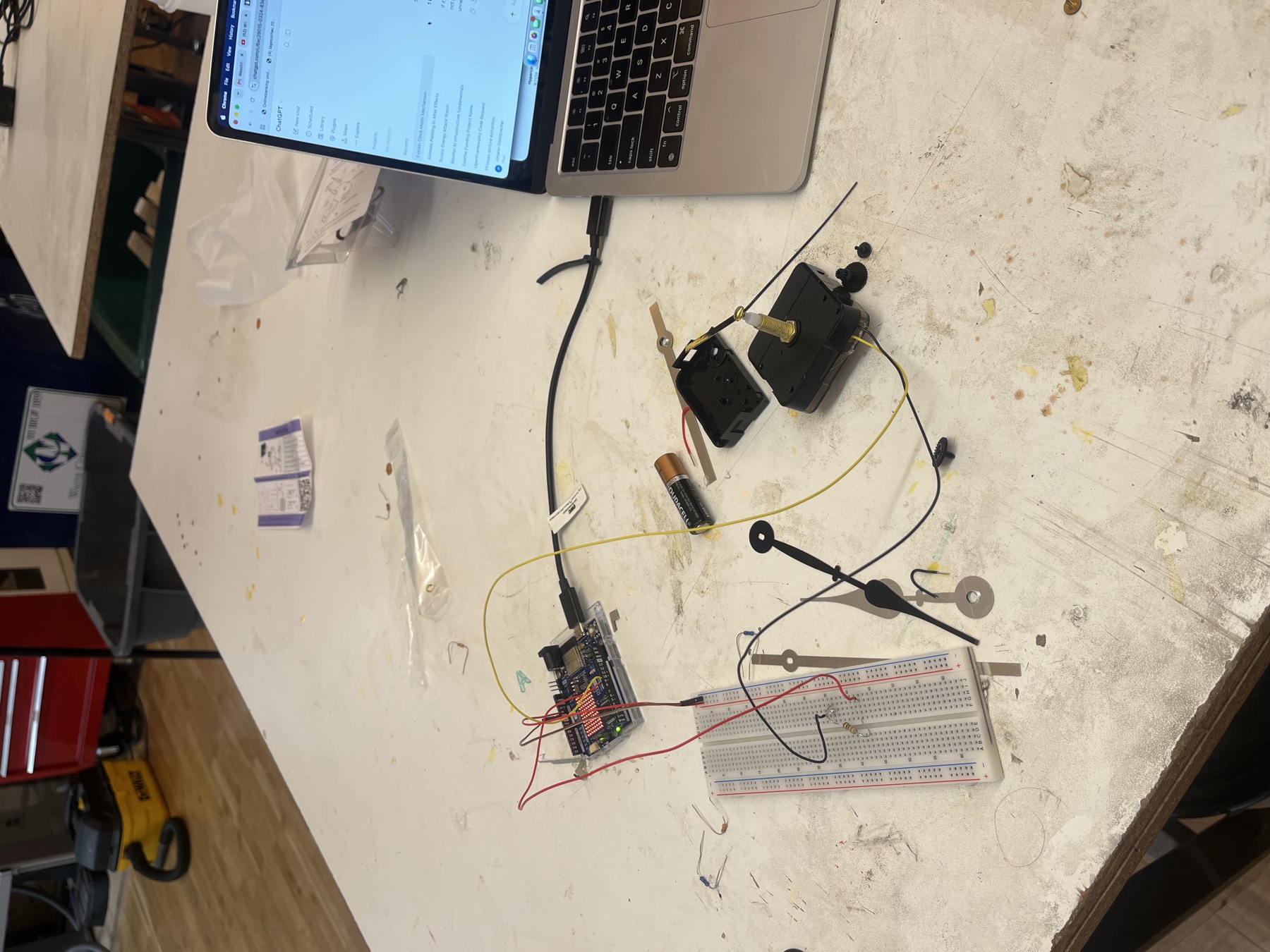
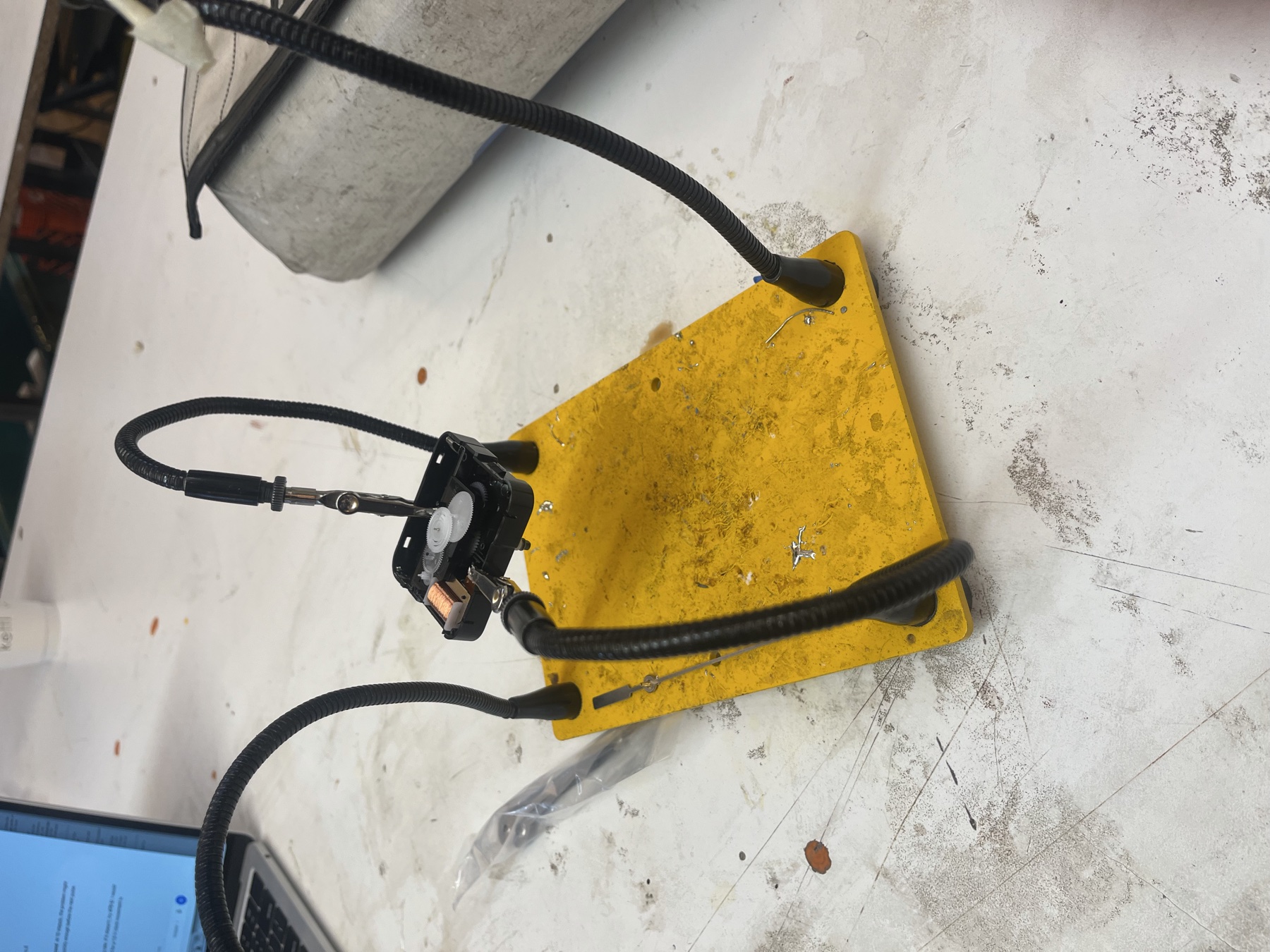
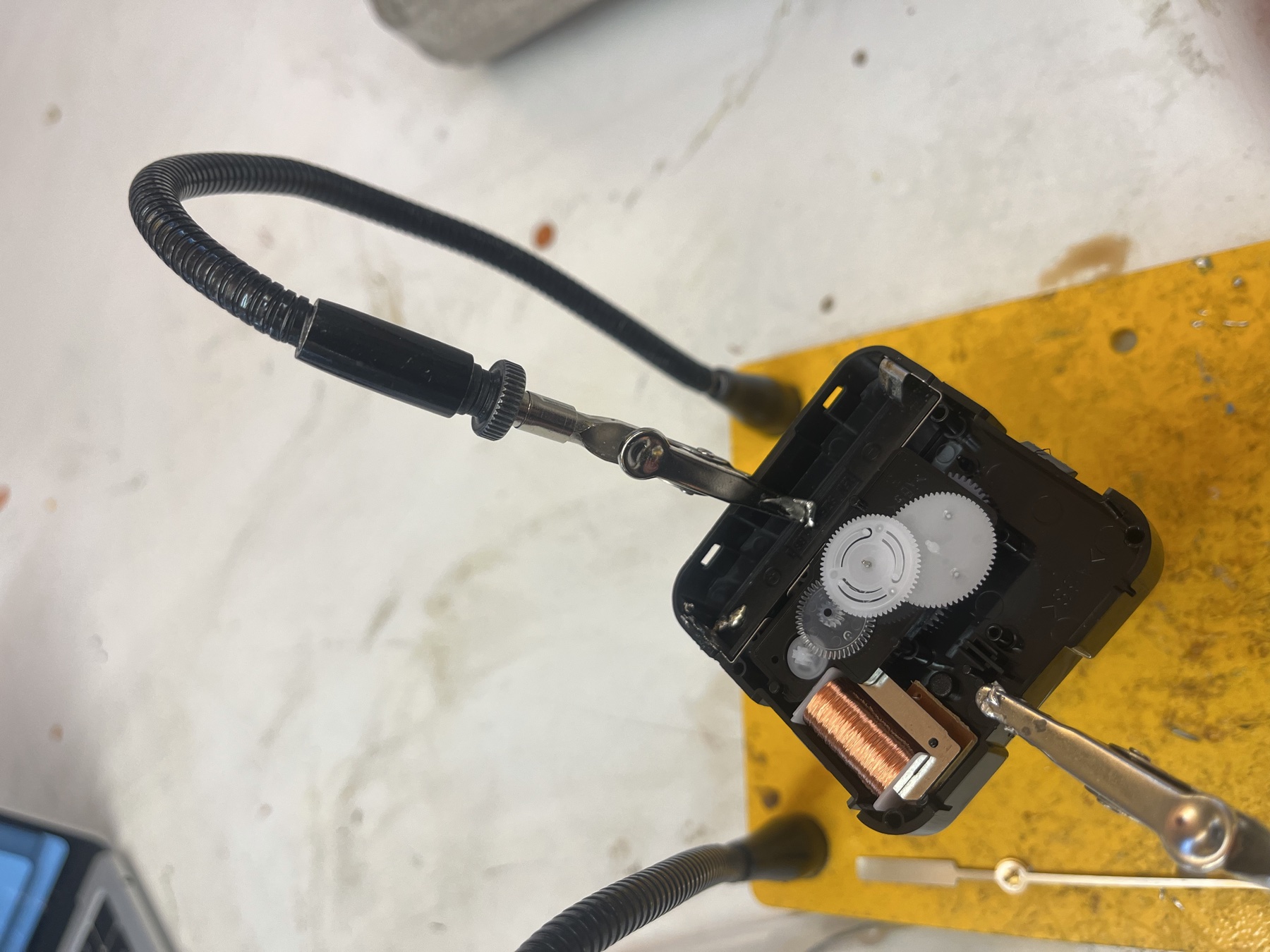
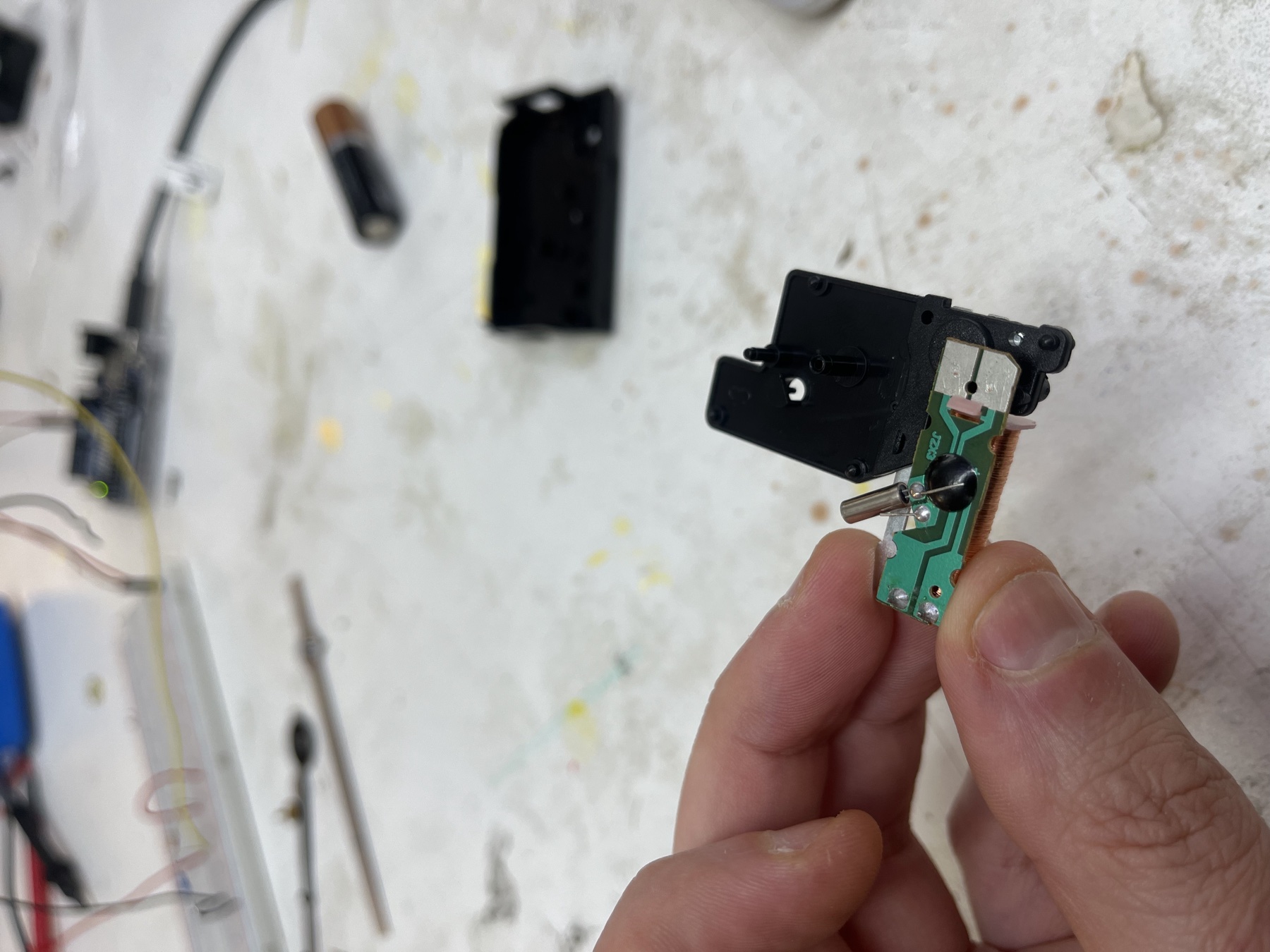
As a next step I manipulated the speed of a clock. I did so by inducing an Arduino signal onto a quartz-controlled clock movement. The Arduino’s 5V digital signals were divided to 1.5V with a voltage divider.